
Excellence in Motion
Customs clearance is the process of obtaining permission from government authorities to import or export goods across international borders. It involves documentation, duty payments, and compliance with Indian customs regulations under the Customs Act, 1962.
As licensed Customs Brokers (CHA), we provide expert guidance on customs tariff classification, import/export regulations, and duty optimization — ensuring your goods clear customs within 24-72 hours.
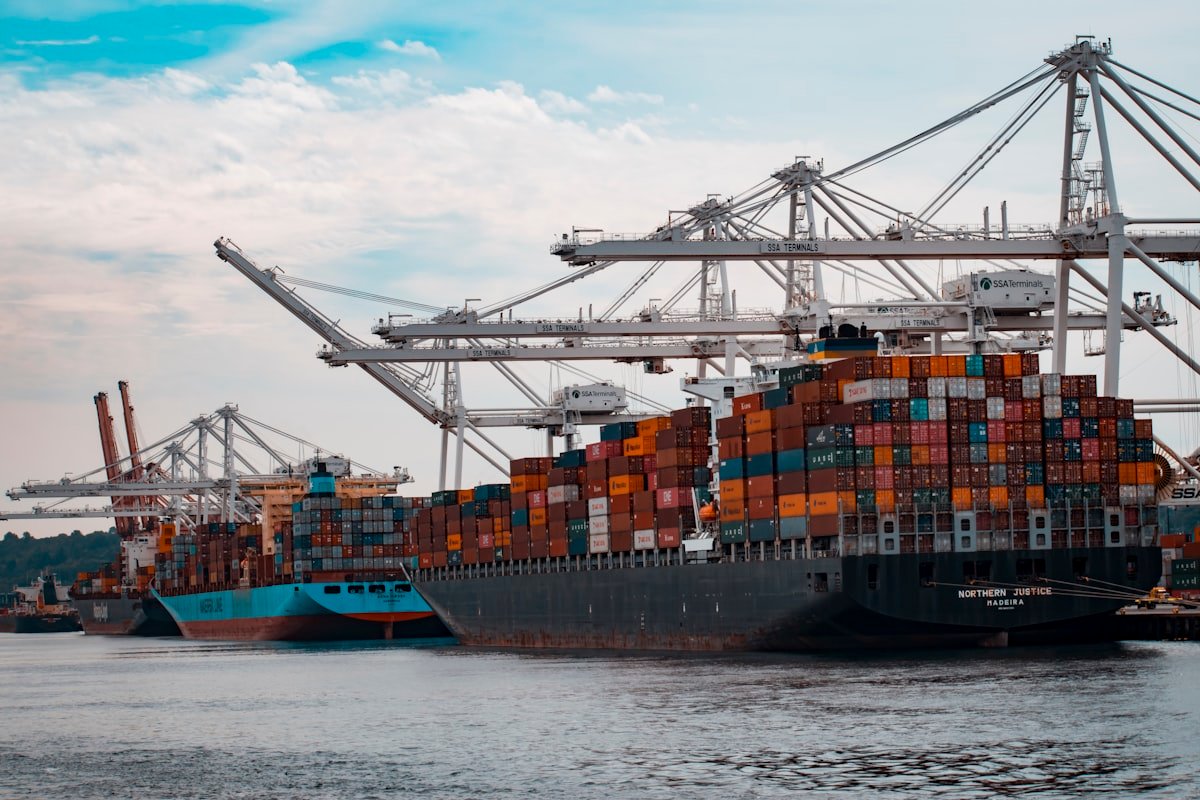
Understanding the complete customs clearance workflow for imports into India
Obtain Import-Exporter Code (IEC) from DGFT — a mandatory 10-digit code linked to PAN. Register on ICEGATE for e-filing, obtain GST registration (GSTIN), Authorized Dealer (AD) Code from bank, and Digital Signature Certificate (DSC).
Carrier files Import General Manifest (IGM) upon vessel arrival, listing all goods aboard. This is a legal requirement under Section 30 of the Customs Act, 1962.
Filed electronically on ICEGATE portal with goods description, value, HSN classification, and tariff details. Self-assessment by importer/CHA. Should be filed BEFORE vessel arrival for Advance Filing benefits.
Automated Risk Management System categorizes shipments into channels: Green (automatic clearance), Yellow (document verification), Orange (document + physical examination), Red (detailed physical examination).
Duty paid through ICEGATE e-payment portal via Internet Banking, NEFT, or RTGS. Once satisfied, customs officer grants 'Out of Charge' (OOC) — the final clearance milestone before cargo release.
Formal legal declaration to customs, filed via ICEGATE. Contains all information from B/L and Invoice. Types: Home Consumption, Warehousing, Ex-bond.
Contains buyer, seller, price, freight terms (Incoterms). Must feature correct HS codes and weight must match Bill of Lading.
Master transport document from carrier serving as receipt of goods, contract of carriage, and document of title.
Shared space in multi-client facility. Cost-efficient for variable volumes. No long-term commitment. Ideal for new markets and seasonal storage needs.
Exclusive space customized to specific requirements. Preferred for high-volume brands requiring better control over operations.
Temperature-controlled facilities for pharma, dairy, frozen food, and fresh produce. GDP-compliant (pharma) and FSSAI-registered (food).
Customs-bonded storage for EXIM freight. Duty payment deferred until goods are removed from the warehouse. Available at port-adjacent locations.
Inspection, verification, quantity/quality checks, WMS entry
Items stored in designated locations with barcode/RFID labeling
Proper shelving, climate control, security systems (CCTV), regular counts
Orders received from sales channels, items picked, barcode scanning
Items packed, labeled with shipping info, quality check before dispatch
Carrier pickup, documentation, tracking, dispatch confirmation
Let our licensed customs brokers and warehousing experts handle the complexity while you focus on growing your business.